






Hi there! How can we help you today?
Interior Design & Architecture Website Design
-
Home
-
Premium Interior Design & Architecture Website Design
Premium Interior Design & Architecture Website Design
Client
Vietnam
Start
Sep 25, 2026
Author
Thắng Dev
Place
Ho Chi Minh City
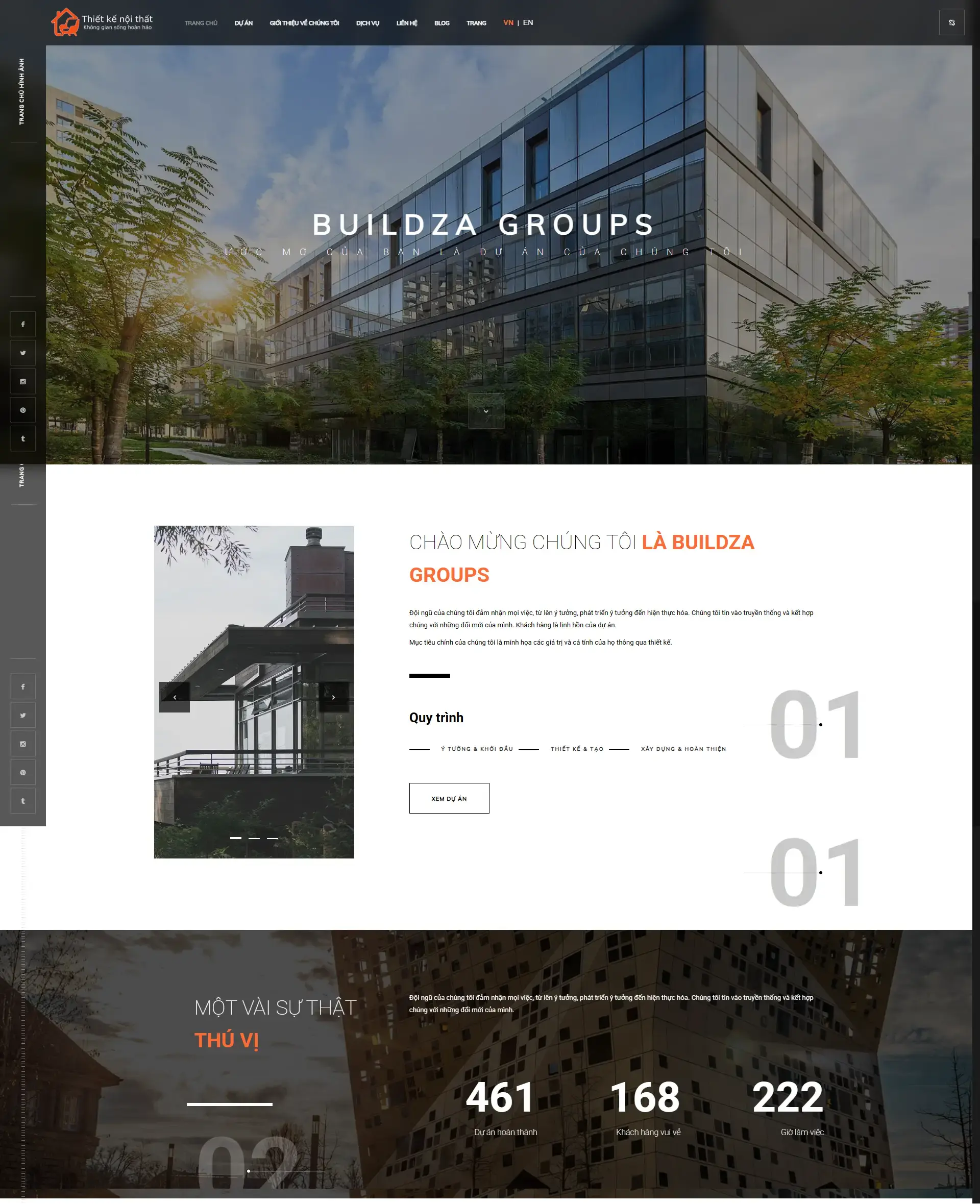
Premium interior design and architecture website: modern, minimal and image-led, showcasing the brand, design capabilities, workflow and featured projects, responsive and SEO-friendly.
Premium interior design – architecture website design
The website is built for businesses working in interior design, architecture and construction, with the aim of creating a modern, professional online space that clearly expresses the brand's identity.
Instead of a traditional corporate website layout, the interface follows a minimal, editorial and premium style, focusing on project imagery, white space, typography and subtle motion. Each section of the website is designed so that visitors can quickly get a sense of the brand's architectural style, creativity and quality.
A Strong First Impression
The homepage is built as a showcase of standout architecture and interior projects. The Hero section uses large images with a dark overlay, bold typography and a brand message to make an impression from the first seconds of a visit.
Using large images suits the nature of the interior and architecture industry, where image quality plays an important role in conveying design style. Rather than putting too much content on screen, the interface prioritizes images and key information, making the overall look elegant and easy to focus on.
Introducing the Brand and Design Capabilities
The brand introduction section is designed with a balanced layout of images and content. Users can quickly learn about the business, its design direction, experience and the values the brand stands for.
The content is kept concise, combined with typographic accents and white space for an upscale feel. This section also helps the business build trust with customers before they look more closely at completed projects.
Design and Project Delivery Process
One of the key aspects of the interface is its ability to present the work process visually. The process can be shown in stages, from receiving requirements, concept consultation and design to finalizing documents, construction and handover.
A step-by-step presentation helps customers easily understand how the business carries out an interior or architecture project, while conveying professionalism and transparency in the way it works.
Showcasing Interior and Architecture Projects
The projects section is one of the most important parts of the website. Each project is presented with high-quality images along with the project name, building type and related information.
Instead of a simple grid of projects, the interface uses an alternating image layout to create visual rhythm. Some images are shown at a large size to create focal points, while others are offset or combined with typography to resemble a professional architecture portfolio.
This presentation lets the website act not only as a company introduction page but also as an online portfolio, where customers can explore the style and quality of completed projects.
An Immersive Visual Space
In interior design and architecture, images can convey information much faster than long paragraphs of text. That is why the interface dedicates plenty of space to project photos, renderings, interior spaces and architectural details.
Image sections are combined with light motion effects and an airy layout, giving users the feeling of exploring an architecture collection rather than simply reading a corporate website.
Modern, Minimal UI/UX Design
The interface uses a minimal design language with a clear typographic system, generous white space, refined lines and neutral colors. A few accent colors are used deliberately to create brand recognition and guide users' attention.
Navigation is kept simple so users can easily reach key sections such as About, Projects, Services, Contact and Blog. Call-to-action buttons are placed at suitable positions to help customers move from browsing to getting in touch.
Responsive on Desktop, Tablet and Mobile
The website is designed to be responsive, so the interface adapts to many different screen sizes.
On Desktop, the website uses the wide space to present projects with large images and an editorial layout. On Tablet, content sections are resized and re-spaced to keep things balanced. On Mobile, the layout is optimized vertically, typography is adjusted and interactive elements are designed for touch.
Optimized User Experience
The user experience is built on the principles of simplicity, clarity and easy discovery. Visitors can start from the homepage, learn about the brand, view featured projects, explore services and finally move on to the contact section.
Clear navigation and well-organized content help reduce the time spent looking for information and create a natural journey for customers.
SEO for an Interior Design Website
Beyond aesthetics, the website is built with a structure that is friendly to SEO. Content is organized into topic groups related to interior design, architecture, projects, services and company capabilities.
Headings, URLs, body text, images and information sections are organized logically to help search engines understand what the website is about. This gives the business a foundation for continuing to develop content and reach more customers through organic search.
Images and Page Load Speed
Since interior and architecture websites usually use many high-resolution images, image optimization is an important part of development. Images need to be processed with suitable dimensions, formats and file sizes to balance display quality and page load speed.
This optimization helps the website keep a high-quality visual experience while aiming for fast loading and stable use across devices.
Featured Projects System
The featured projects section lets the business actively present its representative projects. Each project can be expanded into a detail page with images, project information, design concept, scale and related content.
This structure makes it easy for the website to grow into a large project library in the future while keeping a clear structure.
Room to Grow
The website is designed not only to introduce the brand today but also to add more functions in the future, such as a project library, an architecture – interior blog, detailed service pages, consultation forms, quote requests, customer management and online marketing tools.
Thanks to the clearly organized content structure, the business can keep adding new projects, updating articles and developing SEO content without affecting the overall experience.
Project Goals
The goal of the website is to build an online platform that conveys the brand character, design style and project delivery capabilities of an interior – architecture business.
The website not only provides information but also acts as an online portfolio, helping customers get a clearer picture of the design style, project quality and work process before contacting the business.
By combining modern UI/UX, high-quality images, a minimal layout, responsiveness and an SEO-friendly structure, the website offers a professional experience suited to premium interior, architecture, construction and design brands.
Outcome
The website creates a distinctive online space focused on project imagery and an experience of discovery. The layout is built to be both aesthetically pleasing and practical, helping the business present its capabilities, showcase projects and create touchpoints with potential customers.
This design direction suits businesses that want to build a professional brand image in interior design, architecture, construction and premium real estate.
1. What style is this interior design website designed in?
It is designed in a modern, minimal and premium style, focusing on project imagery, typography, white space and an editorial layout to create a professional feel suited to the interior – architecture field.
2. Is the website responsive on mobile phones?
Yes. The interface is designed to be responsive on Desktop, Tablet and Mobile, so content, images, menus and interactive elements display appropriately on each screen size.
3. Can new interior projects be added to the website?
Yes. The website structure can be extended so the business can add new projects, project photos, project information and introductory content without changing the whole interface.
4. Can the website have a detail page for each project?
Yes. Each project can have its own detail page, including images, project information, design concept, scale, location and related content.
5. Does the interior design website support SEO?
Yes. The website is built with a clear content structure; headings, URLs, images and content are organized to be search-engine friendly, laying a foundation for long-term SEO growth.
6. Can the website include a consultation request form?
Yes. A contact and consultation sign-up form can be integrated so customers can send details about their interior design or architecture needs, or request a quote directly on the website.
7. Can the website include a Blog?
Yes. The blog can be used to publish articles on interior design, architecture, design trends, materials, projects and industry knowledge, while also supporting SEO content growth.
8. Can the website use high-quality project images?
Yes. The website is designed so that project images are the centerpiece of the experience. However, images should be optimized in file size and dimensions to balance display quality and page load speed.
9. Can the colors and brand identity be changed?
Yes. Colors, typography, logo, CTA buttons and other interface elements can be adjusted to match each business's brand identity.
10. Can more features be added to the website in the future?
Yes. The website can be extended with a project library, blog, quote form, consultation booking, customer management, marketing integrations and other features depending on the business's needs.
Share this project:
Note: some projects/templates were built and customised by TeamDevDesign on themes, plugins or source code licensed from third parties (e.g. Botble, ThemeForest, CodeCanyon). Names and trademarks belong to their respective owners. See Terms of Use.